 Gold-making fees affect sales profitability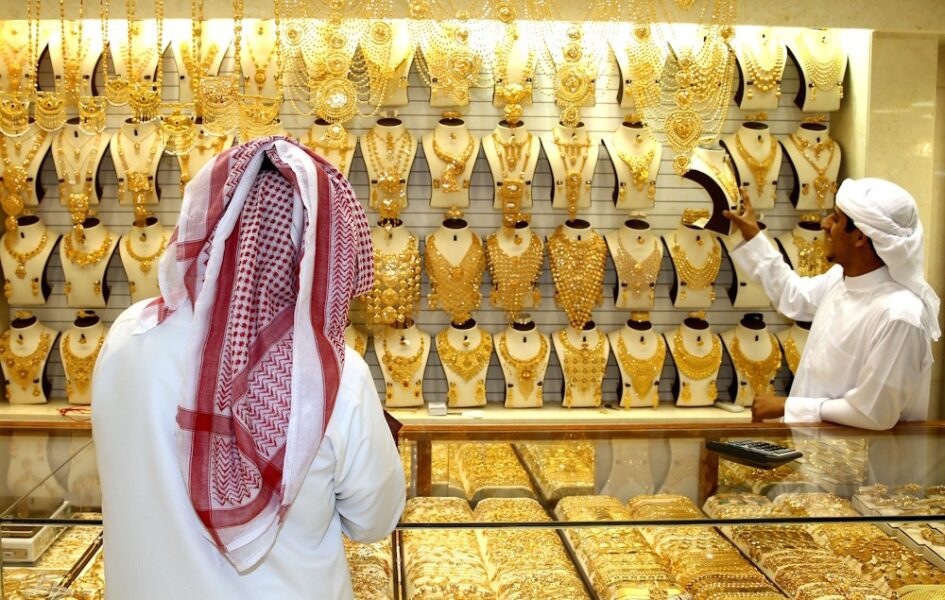
Gold prices may increase, yet one can still incur losses when liquidating their jewellery. For residents and tourists in the UAE considering future resale, it is important to note that making charges can significantly diminish any potential profit. The rationale is clear: your invoice encompasses both the gold and the labour associated with crafting the ornament. When selling, one should not presume that the buyer will compensate for that craftsmanship. A wedding necklace or a gift possesses intrinsic value that transcends its potential market price in the future. If you also anticipate it to safeguard your savings, the inquiry becomes how much gold must appreciate before you can recoup the amount you invested. For plain gold jewellery priced by weight, the invoice typically consolidates the gold component, making charges, and applicable VAT. Items that include stones or other materials require a distinct analysis, as their overall weight does not directly equate to their gold content. Several gold retailers publish retail gold jewellery prices, with centrally controlled shop displays updated three times daily to reflect international bullion-market movements. The displayed rate serves as a reference point; however, it does not convey the ultimate cost of an ornament.
Making charges can be expressed as a per gram amount, a percentage of the gold component, or as a flat fee. Enquire about the methodology employed by the retailer to determine the charge prior to engaging in a comparison of quotations. A percentage-based charge experiences an increase in dirham terms as the gold rate escalates, irrespective of the piece’s weight and the percentage remaining constant. A fixed per-gram charge does not inherently rise in conjunction with the metal price. Consider an illustrative 20-gram, 22K necklace with a quoted gold component of Dh5,785. This is a calculation example, not a current gold-price quotation. A 20% making charge contributes Dh1,157, resulting in a subtotal of Dh6,942. With a 5% VAT applied to Dh347.10, the total bill amounts to Dh7,289.10. For a typical consumer jewellery acquisition from a VAT-registered seller, VAT usually pertains to the taxable selling price, which encompasses making charges. If you later received only the original Dh5,785 gold component, you would incur a loss of Dh1,504.10-approximately 20.6% of your purchase price. That presumes a stable gold rate and the absence of any buyer deduction.
To recover the full bill, the gold component would need to appreciate by 26%, assuming the buyer remits its complete future value without any deductions. Even a 10% increase would result in a shortfall of Dh925.60 compared to your original expenditure. Reducing making charges narrows that gap. With a 5% charge, the identical gold component would yield a total bill of Dh6,377.96 after VAT, necessitating a 10.25% increase to achieve break-even under the same assumptions. These figures demonstrate the impact of purchase costs. They do not forecast gold prices or assure resale returns. A promise of “full gold value” may indicate exchange credit toward another purchase rather than cash. Published UAE retailer terms differentiate between the two and may exclude original making charges and taxes from subsequent exchange valuations, while implementing a distinct deduction for cash buyback. Enquire about the amount the shop would offer for an outright sale of the piece, as well as the credit it would provide toward a replacement. An exchange may also entail the payment of new making charges and the relevant VAT on the newly acquired ornament. Obtain the policy in a documented format and retain your invoice for future reference. Confirm the methodology employed by the buyer in evaluating weight and purity, the application of any deductions, and the specific conditions that pertain to stone-set or fixed-price jewellery.
Negotiating making charges can be advantageous when the retailer allows for such discussions. Emphasise the ultimate cost instead of the promotional discount: a 50% decrease on Dh1,000 results in a remaining balance of Dh500, which exceeds the price of a similar item priced at Dh400 without any promotional offer. Compare analogous weights, purities, and designs. Request that each shop provide the net gold weight, the rate applied, the making charge, any stone charges, and the final bill. If your primary objective is investment rather than adornment, it is prudent to compare bullion bars with investment coins as well. They entail premiums and possible storage or insurance expenses, thus it is advisable to request both the purchase price and the current buyback quotation for the specific product. For a jewellery buyer, that same comparison proves advantageous prior to making a purchase. Understanding the potential recovery value enables you to assess your expenditure on the gold itself, as well as the investment in the design you wish to showcase.