 Dubai Gold Rates Fall YoY as Retailers See Savvy Festive Shoppers
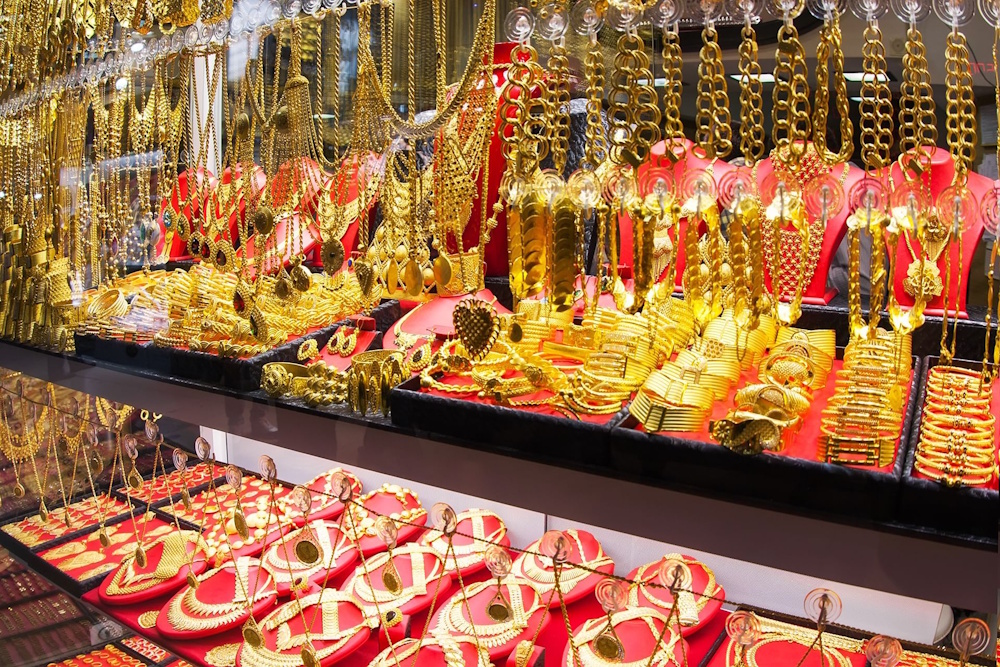
As Indian expatriate families throughout the UAE gear up to commemorate Dhanteras and Diwali, the acquisition of jewellery continues to play a significant role in the festive customs. However, with gold prices undergoing significant fluctuations this year, the customary festive acquisition is increasingly influenced by financial constraints, practicality, and the pursuit of value. Jewellers assert that customers are not necessarily forsaking gold. Instead, many are opting for lighter chains, smaller bangles, and contemporary designs. Natural diamonds and coloured gemstones are increasingly being incorporated alongside conventional 22-karat gold jewellery. Dhanteras marks the inaugural day of the five-day Diwali festival, occurring on the 13th day of the waning phase of the Hindu month of Kartik. The name integrates “dhan”, which signifies wealth, and “teras”, denoting thirteenth. Devotees revere Goddess Lakshmi as the embodiment of prosperity and Lord Dhanvantari, recognised as the divine physician, for health. In the UAE, a country that hosts a significant population of Indian expatriate families, it is customary for them to light lamps and engage in home cleaning activities. Many gather at the gold souk and shopping malls, as the purchase of gold, silver, or new utensils on this day is thought to attract good fortune for the upcoming year.
John Paul Alukkas noted that the composition of the festive shopping basket has evolved significantly over the last five years. “If I look back five years, the festive basket was heavily dominated by traditional, heavier bridal sets and classic gold. Today, the mix is far more dynamic. Our top sellers right now are lightweight gold chains, versatile diamond pendants and everyday-wear bangles.” He stated that the transition was not solely about consumers purchasing less jewellery, but rather about discovering pieces that could be utilised beyond a specific festival or event. “The shift isn’t about customers buying less, it’s about them buying smarter. They want pieces that offer the festive feeling but can seamlessly transition into their everyday wardrobe. It’s a beautiful blend of tradition meeting modern practicality.” Across jewellery retailers, lightweight designs are emerging as a significant response to elevated gold prices, while traditional pieces maintain their relevance during festivals and weddings. Shamlal Ahamed observes that customers are demonstrating a keen interest in collections that encompass natural diamonds, precious gemstones, and contemporary stackable gold jewellery collections. “Over the past five years, consumer preferences have become increasingly diverse. While traditional gold jewellery continues to remain a festive favourite, customers are also embracing lightweight, contemporary designs, natural diamond jewellery, coloured gemstones, and everyday-wear pieces that offer both style and value,” Ahamed said.
At Bafleh Jewellers, the enduring appeal of traditional 22-karat gold jewellery is evident, especially in the categories of necklaces, bangles, and chains. The retailer is observing a growing interest in lightweight everyday pieces, diamonds, and contemporary designs. Chirag Vora says customers had become more conscious of both design and price as gold became more expensive. “Customers are increasingly looking for pieces that offer aesthetic appeal, cultural significance and long-term value.” At Kanz Jewels, the assortment also mirrors the UAE’s varied clientele. Anil Dhanak, managing director of Kanz Jewels, states that Indian customers have consistently preferred 22-karat gold jewellery for festivals, weddings, and gifting, whereas Western customers typically exhibit a greater inclination toward 18-karat pieces. The differences underscore the necessity for retailers to accommodate a variety of cultural traditions, individual preferences, and financial capabilities, even as the overall market adapts to fluctuations in gold prices. Gold prices have exhibited significant volatility in 2026, rendering timing a crucial factor for consumers contemplating festive purchases.
On November 6, the price of 22-karat gold in Dubai was set at Dh451.50 per gram, whereas 24-karat gold was valued at Dh487.50. On Diwali day last year, October 20, 2025, the corresponding rates were Dh474.25 and Dh512.25 per gram, respectively. That positions 22-karat gold approximately Dh22.75 per gram lower than its valuation on the corresponding festival date of the previous year. The 24-karat rate has decreased by Dh25 per gram. These are reference gold rates, excluding charges associated with jewellery-making and other applicable costs. The comparison, however, reflects merely a singular moment within a notably tumultuous year. Gold surged to a record of around $5,595 an ounce in January before retreating sharply toward $4,000 amid changing expectations for US interest rates, a stronger dollar, and the impact of the Iran war on oil prices and bond yields. For shoppers, the recent pullback provides a degree of relief in comparison to last year’s festive peak; however, it does not eliminate the uncertainty regarding future prices.
Joyalukkas’ Alukkas indicates that customers are adapting to the prevailing uncertainty by altering the mix of their purchases instead of merely postponing their acquisitions in anticipation of lower gold prices. “It’s a fascinating shift in behavior. Are they buying fewer grams? Yes, on average. Are they spending more overall? Also, yes. And are they holding off? Some are, but the majority are simply pivoting.” He indicates that customers frequently adhered to a comparable budget while choosing lighter, more intricately designed pieces, opting to exchange old gold or contemplate diamond jewellery in place of heavier gold sets. Bafleh’s Vora described a similar pattern, with some shoppers adhering to their planned expenditure but purchasing fewer grams, while others opted for smaller pieces to stay within their financial constraints. Dhanak of Kanz Jewels stated that elevated prices had not diminished the inclination to purchase gold during favourable occasions. “When prices rise, consumers tend to adjust their budgets by purchasing lighter pieces or fewer grams rather than abandoning their purchases altogether. We therefore remain optimistic about festive demand.”
For numerous households, the choice extends beyond a mere computation of the daily gold rate. Gifting, weddings, and enduring family traditions persist in shaping the timing and rationale behind jewellery purchases. Retailers are employing advance-payment plans, exchange programs, and festive promotions to facilitate more manageable purchasing options. Malabar Gold & Diamonds reported that its initiative enabling customers to pay a 25 per cent advance to secure the current gold rate has gained notable traction during the festive season. “Rather than postponing purchases, many are actively seeking ways to maximize value through planned buying,” Ahamed said. Such schemes can assist buyers in mitigating the risk associated with price increases prior to finalising a planned purchase. However, customers should scrutinise the scheme’s terms, including the authenticity of the rate lock, the procedures for cancellations, and any additional conditions that may be applicable. Exchange programs provide an alternative for consumers possessing older jewellery that they no longer utilise. Exchanging existing gold for a new design can mitigate the additional cash required; however, the ultimate value is contingent upon factors such as weight, purity, deductions, and the retailer’s exchange conditions. The primary focus should be on the overall cost, rather than solely the listed gold price. Making charges, stone costs, and applicable taxes can substantially influence the price of a completed item. Despite the uncertainty surrounding prices, jewellers maintain a broadly optimistic outlook regarding festive demand, although they anticipate that buying patterns will continue to evolve.
Malabar Gold & Diamonds expects demand to be supported by festive purchases and the upcoming wedding season. “For many families, buying gold during Dhanteras and Diwali is not just a purchase decision but also a cherished tradition, and we expect that sentiment to continue driving strong demand,” Ahamed said. Joyalukkas expects the overall value of purchases to remain robust even if customers buy fewer grams of gold. “If prices keep climbing, I expect the volume of gold in grams to adjust, but the overall value of purchases to remain robust. Customers will lean towards beautiful, lighter designs, diamonds or take advantage of our exchange programs,” Alukkas said. Bafleh anticipates that demand will continue to be significant, although it may become more restrained if prices increase further. Vora indicated that consumers are expected to prioritise lightweight jewellery, smaller purchases, and designs that strike a balance between affordability and visual appeal. The retailer anticipates that purchasing power and consumer confidence, in conjunction with gold prices, will play a significant role in determining the performance of the season. The near-term direction remains ambiguous. High US Treasury yields, a stronger dollar, and expectations of another rate hike in December are global factors that will exert downward pressure on gold. Most analysts have revised downward their projections for gold in 2026 and 2027. However, central-bank buying, physical demand, and concerns regarding government debt and currency depreciation may serve to provide support.
These forecasts represent estimates rather than certainties, indicating that gold may experience significant fluctuations in either direction. UAE retail rates will align with international bullion prices. For consumers contemplating the decision to purchase now or postpone in anticipation of a further decline, it is impossible to pinpoint the precise nadir. Individuals purchasing jewellery for a wedding or festival with a set date may opt to adhere to a budget and select an item within their financial means, rather than basing their acquisition on market forecasts. Consumers with greater flexibility can assess rates over multiple days, examine making charges, and evaluate whether an advance-payment scheme provides authentic protection against potential price hikes. Acquiring assets in increments can mitigate the risk associated with allocating the full budget at a single price point, though it does not ensure a reduction in the total expenditure. As we commemorate Dhanteras, the enduring allure of gold persists. What is evolving is the manner in which families opt to introduce a touch of festive sparkle into their homes.